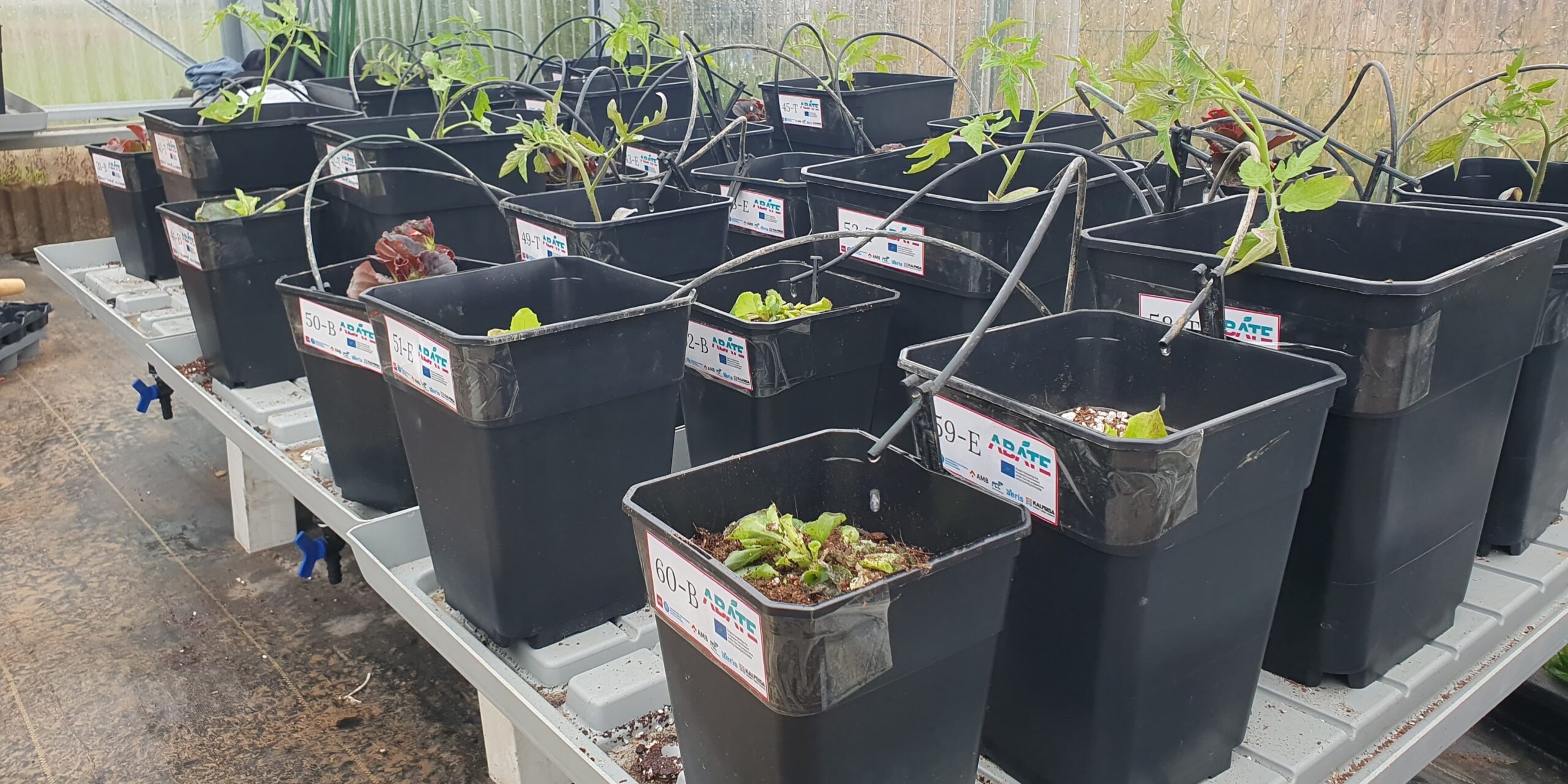
Last Thursday, March 5, the experimental campaign of crops planted in the greenhouse of the LIFE ABATE pilot, located in Ecoparc 3, began, alongside the Grup de Recerca i Innovació de la Construcció of the Universitat Politècnica de Barcelona (UPC).
What does this stage of the pilot consist of?
As a final stage of the solution proposed in the LIFE ABATE project, the treated air rich in CO2 is injected into a greenhouse. In this way, the aim is to study the impact that this air has on the growth of plants and crops, as well as its viability as a reservoir of the CO2 produced.
In this first campaign, the growth of the greenhouse plants will be monitored under standard conditions. In other words, what is called a “blank” will be done to study the development of the crops in normal conditions with ambient air. Therefore, in this first phase, it will be ensured that the hydraulic infrastructure and the dosing systems work with the precision that this living biological requires.
On the other hand, this first campaign is essential to later be able to compare the growth of the crops in standard conditions with the other campaigns, in which treated air rich in CO2 will be applied.
What crops have been introduced?
In this trial, we are working with two food crops–tomato (Solanum lycopersicum) and lettuce (Lactuca sativa)–and an ornamental–begonia (Begonia spp). Horticultural plants of different agronomic interests have been chosen so that the study is as representative and general as possible.
These horticultural species were chosen because each has an important and different part of interest. The interest of the tomato (Solanum lycopersicum) is the fruit; for this reason, we are interested in it passing through the vegetative phase and entering into the reproductive phase. On the other hand, the interest of the lettuce (Lactuca sativa) is the leaf and, in this case, we are interested in its vegetative growth and harvesting it before the reproductive phase.
The position of each plant inside the greenhouse is a factor that directly influences its growth. Depending on where it is situated, solar radiation, temperature and humidity vary. For this reason, the different crops have been randomly distributed inside the greenhouse so that their location does not interfere with the results.

Seedbed of tomato (Solanum lycopersicum) and lettuce (Lactuca sativa) Seedbed of tomato (Solanum lycopersicum) and lettuce (Lactuca sativa)
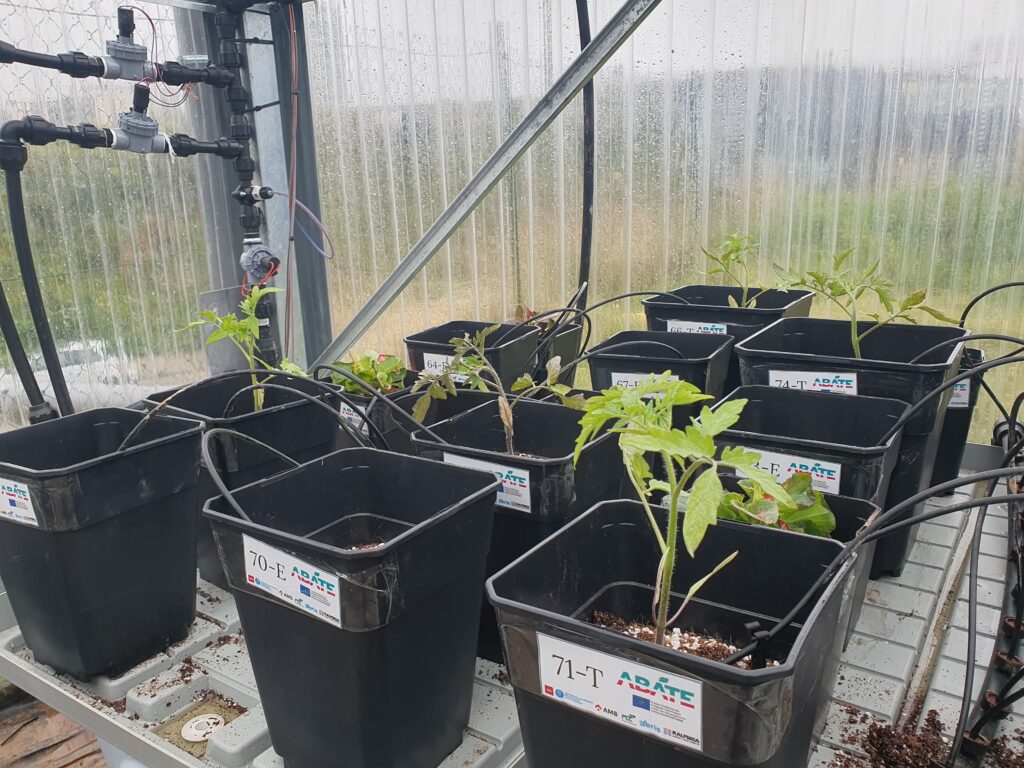
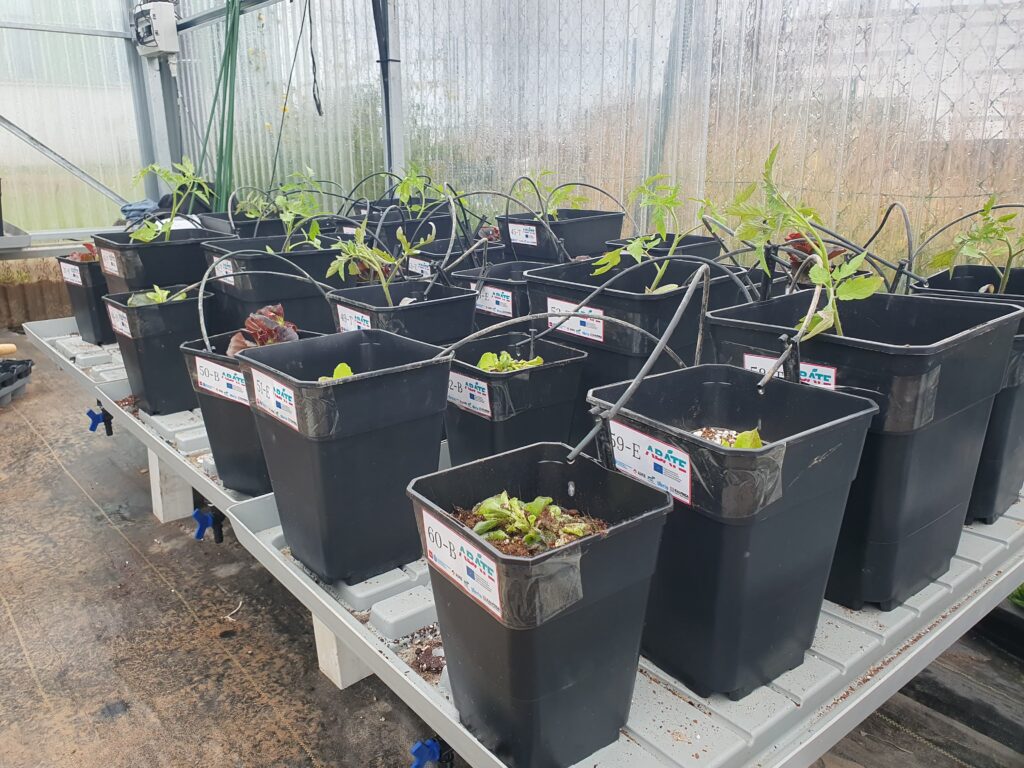
How does the greenhouse work?
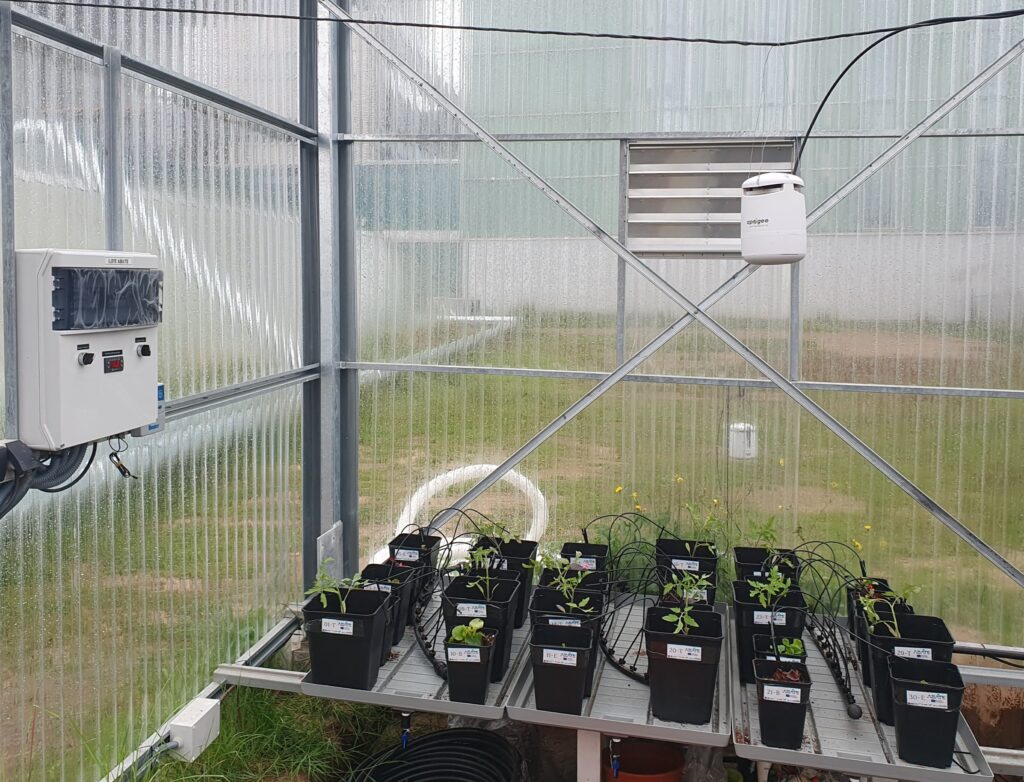
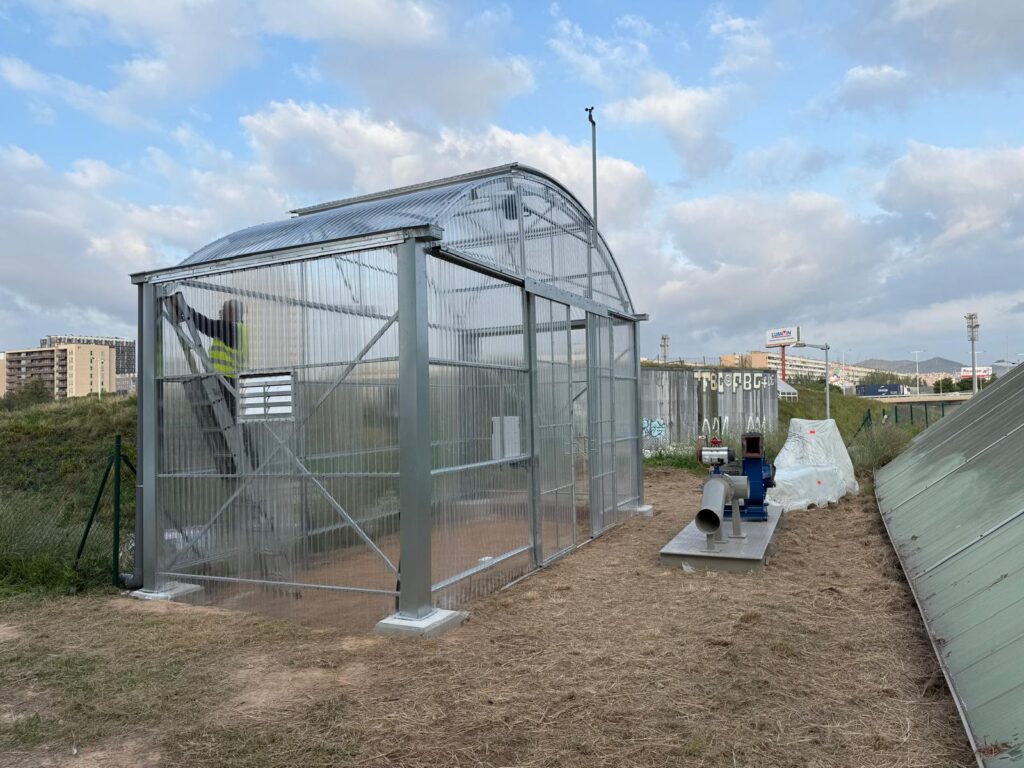
The LIFE ABATE system greenhouse is monitored so that the zenith window opens automatically when a set temperature limit is reached to take care of the well-being of the plants inside.
Inside the greenhouse, there are a couple of multivariable sensors that measure humidity, temperature or CO2 concentration to study predictive models for optimal crop growth.

Multivariable sensors Exterior view of the LIFE ABATE greenhouse
The experimental campaign that is now underway will mark a key step in understanding the extent to which the use of treated air rich in CO2 can contribute to crop growth and new strategies for the recovery of this gas. The results of this first phase will serve as the basis for the following experimental campaigns, in which the real potential of this innovative solution will be tested.
Stay tuned to the LIFE ABATE blog, where we will share the progress, results and learnings from this pilot that explores new ways towards a more sustainable CO2 management.